
Interest Free Credit Cards – Top 10 Providers in UK

Last Updated On – 08-09-2026
Interest-free credit cards can make it possible to spread the cost of a large purchase over many months without paying interest, provided the balance is cleared before the introductory 0% period ends.
As of now, some of the longest UK 0% purchase credit card offers extend for up to 26 months.
However, the longest advertised deal is not automatically the best option for every applicant.
Eligibility, the length actually offered, the standard APR after the promotional period and any balance-transfer fees should all be considered.
The leading interest-free credit card providers currently include TSB, M&S Bank, Lloyds Bank, Halifax, MBNA, Barclaycard, HSBC, NatWest, Tesco Bank and Virgin Money.
Credit card products change frequently, and some providers advertise an “up to” interest-free period, meaning an accepted applicant could receive a shorter promotional period based on the lender’s assessment.
What Is an Interest-Free Credit Card?
An interest-free credit card normally gives the cardholder a promotional period during which qualifying purchases are charged at 0% interest.
For example, if £2,400 is spent on a card providing 24 months at 0%, dividing the balance evenly over the promotional period would require repayments of approximately £100 per month to clear the borrowing before interest starts.
This does not mean repayments can be ignored during the interest-free period. The minimum payment must still be made every month.
Missing payments, exceeding the credit limit or breaching other card conditions can potentially result in fees, damage to the cardholder’s credit history and loss of a promotional rate.
Top 10 Interest Free Credit Cards in the UK
1. TSB Platinum Purchase Card

TSB currently sits among the market leaders for interest-free spending, advertising up to 26 months at 0% on purchases.
That makes it particularly attractive for someone making a planned large purchase who wants as much time as possible to repay the balance.
The important word, however, is “up to”. The full 26-month period is not necessarily available to every successful applicant.
| TSB Platinum Purchase Card | Details |
| 0% purchase period | Up to 26 months |
| Representative APR after offer | Around 24.9% variable |
| Annual card fee | £0 |
| Balance transfer option | Available on some offers |
| Best suited to | Longer-term interest-free spending |
| Main consideration | The 0% period offered can depend on eligibility |
A cardholder borrowing £2,600 and receiving the full 26-month promotion would need to repay around £100 a month to clear the balance before the standard interest rate becomes relevant.
2. M&S Bank Purchase Plus Credit Card

The M&S Bank Purchase Plus Credit Card is another leading option, with an advertised purchase promotion of up to 26 months at 0%.
The card can be particularly appealing to regular M&S customers because eligible spending may also earn M&S reward points.
| M&S Bank Purchase Plus | Details |
| 0% purchase period | Up to 26 months |
| Representative APR after offer | Around 24.9% variable |
| Annual card fee | £0 |
| Rewards | M&S reward points on eligible spending |
| Best suited to | Long 0% period plus retail rewards |
| Main consideration | Some applicants may receive a shorter promotional term |
Rewards should not be the main reason for borrowing. The more valuable feature is the ability to make planned purchases without paying interest while the 0% promotion remains active.
Anyone carrying a balance beyond the promotional period could face a substantially higher interest charge.
3. Lloyds Bank Platinum 0% Purchase and Balance Transfer Credit Card
Lloyds Bank provides one of the strongest all-round options because its Platinum credit card can combine a long purchase promotion with a separate balance-transfer offer.
The headline purchase period currently reaches up to 25 months at 0%.
| Lloyds Platinum Credit Card | Details |
| 0% purchase period | Up to 25 months |
| 0% balance transfer period | Up to around 23 months on qualifying offers |
| Representative APR after offer | Around 24.9% variable |
| Annual card fee | £0 |
| Best suited to | Purchases and transferring existing card debt |
| Main consideration | Balance-transfer fees and eligibility rules apply |
This can make Lloyds particularly useful for someone who needs both new purchase financing and a way to restructure existing credit card borrowing.
The two promotional periods should nevertheless be treated separately. A 0% purchase promotion does not automatically mean every type of transaction is interest-free.
4. Halifax 0% Purchase and Balance Transfer Credit Card
Halifax is another provider offering a particularly long interest-free purchase period, with qualifying customers potentially receiving up to 25 months at 0%.
Some versions of the product also include a substantial balance-transfer promotion.
| Halifax 0% Credit Card | Details |
| 0% purchase period | Up to 25 months |
| Balance transfers | Promotional 0% period may be available |
| Representative APR after offer | Around 24.9% variable |
| Annual card fee | £0 |
| Best suited to | Longer purchase repayment plans |
| Main consideration | Promotional terms depend on the offer and applicant |
A £2,500 purchase spread evenly over a full 25-month 0% period would require payments of approximately £100 per month.
Paying only the contractual minimum could leave a substantial balance outstanding when the introductory period expires, so calculating the required monthly repayment beforehand is usually more effective.
5. MBNA Dual 0% Transfer and Purchase Credit Card
MBNA has a strong proposition for consumers who want both purchase and balance-transfer functionality.
Its Dual 0% card can provide up to 24 months at 0% on purchases, together with a substantial promotional period for qualifying balance transfers.
| MBNA Dual 0% Card | Details |
| 0% purchase period | Up to 24 months |
| 0% balance transfer period | Up to 24 months |
| Representative APR after offer | Around 24.9% variable |
| Annual card fee | £0 |
| Balance-transfer fee | Usually applies |
| Best suited to | Combining new purchases and existing card debt |
MBNA may therefore be worth considering when a household has both an upcoming large purchase and existing credit-card borrowing charging interest.
Certain promotional transactions may have to be completed within a specified period after the account is opened, so the terms offered with the card need to be checked carefully.
6. Barclaycard Platinum
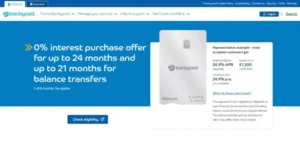
Barclaycard’s Platinum range continues to be competitive for interest-free borrowing.
One of its current combinations provides up to 24 months at 0% on purchases, while also offering a separate interest-free balance-transfer period.
| Barclaycard Platinum | Details |
| 0% purchase period | Up to 24 months |
| 0% balance transfer period | Up to around 21 months on relevant offer |
| Representative APR after offer | Around 24.9% variable |
| Annual card fee | £0 |
| Best suited to | Flexible purchase and balance-transfer borrowing |
| Main consideration | Several Platinum variants can be available |
The existence of several Barclaycard Platinum variants means applicants should pay particular attention to which version is being offered.
One version may prioritise a longer purchase period, while another may favour a longer balance-transfer promotion.
7. HSBC Purchase Plus Credit Card
HSBC remains one of the major providers in the 0% purchase market, with its Purchase Plus offering reaching up to 24 months interest-free on purchases for qualifying applicants.
It may also include a separate balance-transfer promotion.
| HSBC Purchase Plus | Details |
| 0% purchase period | Up to 24 months |
| Balance-transfer promotion | Available on qualifying offers |
| Representative APR after offer | Around 24.9% variable |
| Annual card fee | £0 |
| Best suited to | Long-term interest-free spending |
| Main consideration | Some accepted applicants may receive a shorter 0% period |
An eligibility check can be particularly useful with products advertised as “up to” a particular number of months.
Applicants worried about being declined should avoid making repeated full applications in a short period.
More information on eligibility and credit-card applications is available in iBusinessTalk’s guide to credit cards for bad credit.
8. NatWest Purchase and Balance Transfer Credit Card
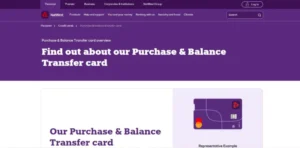
NatWest offers another strong all-round credit card, currently advertising up to 23 months at 0% on purchases.
There can also be a lengthy interest-free period for transferring qualifying existing card balances.
| NatWest Purchase & Balance Transfer Card | Details |
| 0% purchase period | Up to 23 months |
| 0% balance transfer period | Up to around 21 months |
| Representative APR after offer | Around 24.9% variable |
| Annual card fee | £0 |
| Best suited to | New spending plus existing debt |
| Main consideration | Transfer fee and transfer deadline may apply |
Someone carrying expensive card debt should compare the cost of the balance-transfer fee with the interest that would otherwise be paid on the existing card.
There is little benefit in paying a transfer fee for a very long promotional period if the borrower could realistically clear the balance much sooner using a cheaper alternative.
9. Tesco Bank Credit Card

Tesco Bank remains particularly interesting because it can combine interest-free spending with Clubcard rewards.
A leading Tesco purchase offer provides a guaranteed interest-free period of around 22 months for successful applicants rather than advertising only an “up to” headline period.
| Tesco Bank Purchase Card | Details |
| 0% purchase period | Around 22 months on leading purchase offer |
| Type of promotion | Definite period for successful applicants on relevant offer |
| Representative APR after offer | Around 26.9% variable on relevant offer |
| Annual card fee | £0 |
| Rewards | Clubcard points on eligible spending |
| Best suited to | Shoppers wanting certainty and Clubcard rewards |
A slightly shorter guaranteed interest-free period can sometimes be more attractive than a longer “up to” promotion.
For example, someone offered a guaranteed 22 months may prefer that certainty to applying for a 26-month product but receiving a materially shorter alternative offer.
10. Virgin Money All Round Credit Card

Virgin Money completes the top ten with an all-round credit card that can provide approximately 20 months at 0% on purchases, depending on the version currently available.
Its main attraction is the ability to combine purchase borrowing with a balance-transfer promotion.
| Virgin Money All Round Credit Card | Details |
| 0% purchase period | Around 20 months on leading all-round offer |
| 0% balance transfer period | Around 20 months on relevant offer |
| Representative APR after offer | Typically around 24.9%–27.9% variable depending on product |
| Annual card fee | £0 |
| Best suited to | Consumers wanting a simple all-round card |
| Main consideration | Different Virgin Money card versions have different terms |
Virgin Money may not have the absolute longest purchase promotion, but a balanced combination of purchase and transfer features may suit someone who does not need 25 or 26 months to repay.
Which Interest-Free Credit Card Is Best?
There is no single credit card that is best for every applicant.
For someone prioritising the longest possible interest-free purchase period, TSB and M&S Bank are currently among the strongest options, with headline promotions reaching up to 26 months.
Lloyds Bank and Halifax follow closely at approximately 25 months, while MBNA, Barclaycard and HSBC remain competitive at around 24 months.
A different ranking may make more sense for someone transferring existing debt because the balance-transfer period and transfer fee become more important than the purchase promotion.
| Requirement | Providers Worth Considering |
| Longest 0% purchase period | TSB, M&S Bank |
| Purchase and balance transfer combination | Lloyds, MBNA, Barclaycard |
| Long all-round 0% period | Halifax, HSBC, NatWest |
| Rewards alongside 0% spending | M&S Bank, Tesco Bank |
| Guaranteed rather than “up to” period | Tesco Bank on relevant offer |
| Around 20 months for purchases and transfers | Virgin Money |
How Much Should Be Repaid Each Month?
The simplest repayment strategy is to divide the borrowing by the number of months remaining on the 0% promotion.
For example:
| Amount Borrowed | 0% Period | Approximate Monthly Repayment |
| £1,200 | 24 months | £50 |
| £2,400 | 24 months | £100 |
| £3,000 | 25 months | £120 |
| £5,200 | 26 months | £200 |
This assumes no additional spending is added to the card.
Leaving repayment until the final few months can create unnecessary financial pressure and increases the risk that part of the debt will remain when the standard interest rate begins.
What Does “Up to 26 Months” Actually Mean?
This is one of the most important details when comparing interest-free credit cards.
An advertisement stating “up to 26 months at 0%” does not necessarily mean everyone accepted receives 26 months.
A lender may assess an applicant’s income, debts, repayment history, credit report and overall affordability before deciding which promotion and credit limit to provide.
Two applicants applying for the same card could therefore receive different offers.
This is also why an eligibility checker or soft search can be useful before submitting a full credit application.
Will Applying Affect a Credit Score?
Checking eligibility normally uses a soft search, which is different from submitting a full credit application.
A formal application normally creates a hard search on the applicant’s credit report. Several applications over a short period can make someone appear increasingly dependent on new borrowing.
It is therefore better to compare realistic options before applying rather than submitting applications to several providers at once.
Someone with a thin or damaged credit history may find mainstream 0% cards harder to obtain.
The site’s information on securing financing with no credit explains some of the wider issues lenders consider when assessing borrowers without an established credit record.
Is a 0% Credit Card Better Than a Personal Loan?
It depends on the amount borrowed and how quickly it can be repaid.
A 0% purchase credit card can be extremely cheap if the borrowing is completely repaid during the interest-free period. There is normally no interest to pay on qualifying purchases during that period.
A personal loan, in contrast, normally charges interest but provides fixed monthly payments and a defined repayment schedule.
A credit card may be suitable for a planned £1,500 or £3,000 purchase that can comfortably be repaid within 18–26 months.
For larger borrowing or someone who needs the discipline of fixed payments, a loan could potentially be more appropriate.
Consumers already managing several debts may also want to understand how debt consolidation loans differ from moving card debt onto a 0% balance-transfer product.
What Happens When the Interest-Free Period Ends?
Once the introductory 0% period expires, any remaining balance normally starts attracting the card’s standard purchase interest rate.
For many leading cards, the representative APR after the promotion is currently around 24.9% variable, although some products charge more.
That makes the expiry date important.
A cardholder with £2,000 remaining should not assume the borrowing will remain cheap indefinitely simply because the account initially offered 0% interest.
Ideally, the balance should reach £0 before the promotional period expires.
Should Cash Be Withdrawn From a 0% Credit Card?
Generally, no.
An interest-free purchase promotion normally applies to qualifying card purchases rather than ATM cash withdrawals.
Cash advances can attract:
- A cash withdrawal fee
- Interest from the date of withdrawal
- A different interest rate
- Potentially negative implications for future credit assessments
Using a 0% purchase card to withdraw money is therefore very different from using it to pay directly for goods or services.
Does Section 75 Protection Still Apply?
Qualifying purchases made with a credit card can receive Section 75 protection even when the purchase is made during a 0% promotional period.
This can provide additional protection where qualifying goods or services are misrepresented, not supplied or where the supplier breaches the contract.
The normal Section 75 conditions still apply.
Important Rules for Using an Interest-Free Credit Card
A 0% card is most effective when treated as a structured repayment tool rather than free money.
The key principles are straightforward:
- Borrow only an amount that can realistically be repaid.
- Make at least the required minimum payment every month.
- Set up a direct debit to reduce the risk of missed payments.
- Do not exceed the agreed credit limit.
- Avoid cash withdrawals unless the costs are fully understood.
- Record the date when the 0% period expires.
- Aim to clear the entire balance before standard interest begins.
The fact that borrowing costs nothing in interest initially does not make the debt itself disappear.
Frequently Asked Questions
Can someone really borrow at 0% for 26 months?
Yes, qualifying purchases can genuinely be charged at 0% during the promotional period. Minimum monthly repayments must still be made.
Which providers currently offer the longest 0% purchase cards?
TSB and M&S Bank are among the providers advertising up to 26 months, with Lloyds and Halifax close behind at around 25 months.
Does everyone receive the advertised 0% period?
No. Products advertised as “up to” a number of months can provide a shorter promotional period depending on the applicant’s circumstances.
Can an interest-free credit card be used for a balance transfer?
Only if the card includes a separate balance-transfer promotion. A 0% purchase rate should never be assumed to apply automatically to transferred debt.
Do interest-free credit cards charge annual fees?
Most of the mainstream cards listed above currently have no annual card fee, although other charges can apply depending on how the card is used.
Can a 0% credit card improve a credit score?
Responsible use may contribute positively to a credit history over time, while missed payments, excessive borrowing or defaults can damage it.
What is your reaction?